
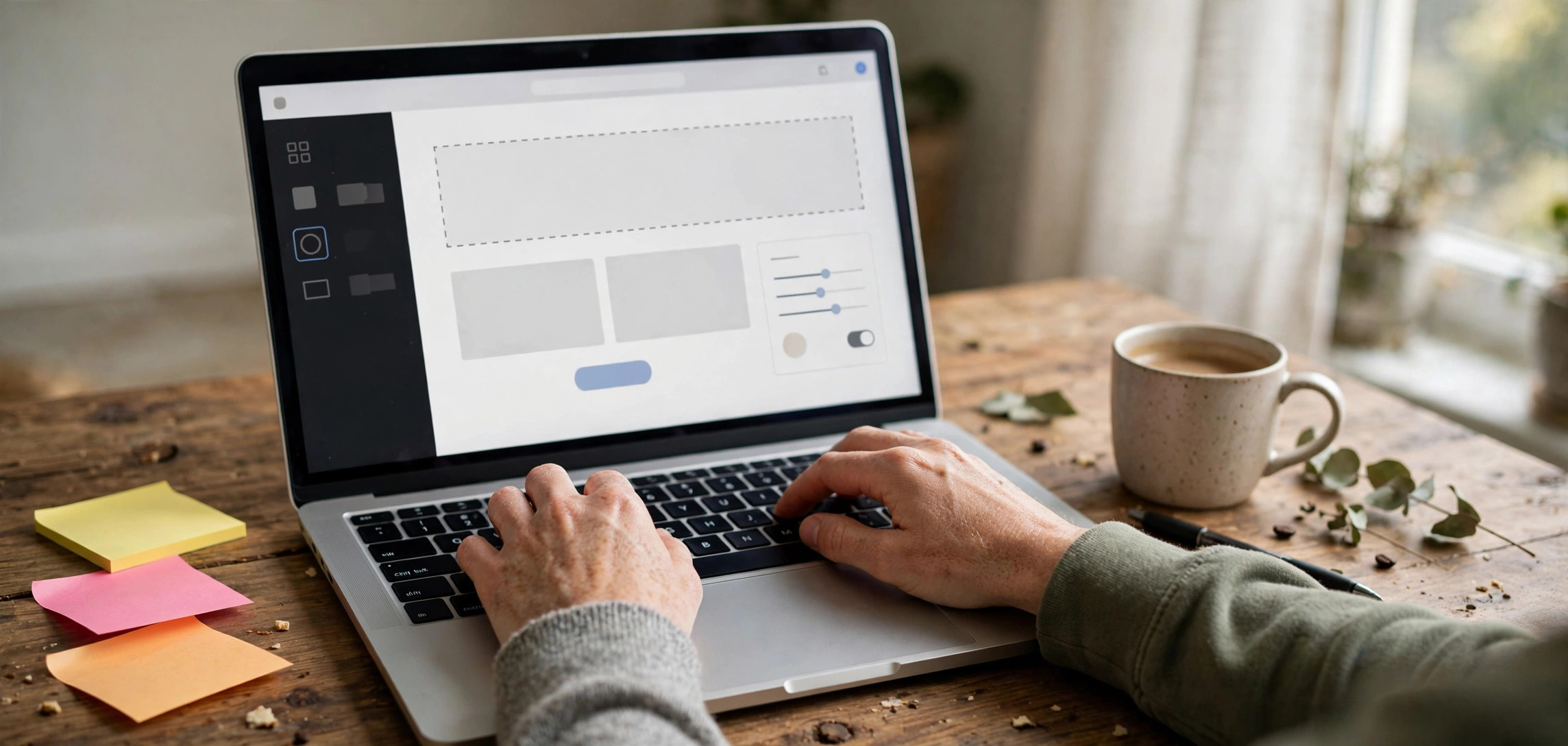
You have a startup idea and zero programming skills. A decade ago, that was a dead end — you either learned to code, found a technical co-founder, or paid an agency thousands of dollars. Today, none of that is required to get started. If you want to know how to build a minimum viable product without coding, the no-code movement has matured into a serious toolkit: visual app builders, automation platforms, and AI assistants that let a non-technical founder ship a working product in weeks, sometimes days. A minimum viable product is simply the smallest version of your idea that delivers real value to real users — and as you will see in this guide, learning how to build a minimum viable product without coding is mostly about ruthless scoping, picking the right tools, and launching before you feel ready.
What “Minimum Viable Product” Actually Means for Non-Technical Founders
Eric Ries popularized the MVP as the version of a product that lets you collect the maximum amount of validated learning with the least effort. For a non-technical founder, the key phrase is “least effort.” Your MVP is not a smaller version of your grand vision — it is one painful problem solved for one specific user, delivered through whatever tool gets it into their hands fastest. A directory site built in Airtable, a booking flow stitched together with Google Forms and Zapier, a community running on a free Circle or Discord server — all of these are legitimate MVPs if real users get real value from them. The trap to avoid is building a “minimum” product that is actually a polished miniature of the final vision. If your MVP takes three months, it is not minimum. Aim for two to four weeks from idea to first user, and let usage data — not your imagination — decide what gets built next. That discipline — one job, one user, the fastest tool — is the real secret behind how to build a minimum viable product without coding successfully.
How to Build a Minimum Viable Product Without Coding in 7 Steps
Follow these steps in order. Each one prevents a classic no-code failure: building the wrong thing beautifully, automating too early, or launching to silence.
Step 1: Define the One Job Your MVP Must Do
Write a single sentence: “My MVP helps [specific user] do [specific task] so they get [specific outcome].” If you need the word “and” more than once, your scope is too big. Cut ruthlessly until removing anything else would break the core value. For example, a meal-planning MVP does not need social sharing, nutrition analytics, or a mobile app — it needs to turn “what should I cook this week?” into a grocery list. This one-sentence scope becomes your shield against feature creep for the entire build. Every time you are tempted to add something, ask whether the sentence still works without it.
Step 2: Map the User Journey on Paper First
Before touching any tool, sketch the screens or steps your user will go through: landing page, signup, core action, result, follow-up. Draw boxes and arrows on paper or a free whiteboard like Excalidraw or Miro. This ten-minute exercise exposes confusing flows while they are still cheap to fix — moving a box on paper costs nothing; rebuilding a database relationship in a no-code tool costs an afternoon. Walk through the journey as your user, narrating each step out loud. Any step where you hesitate or say “well, they would just…” is a gap your MVP needs to handle explicitly or deliberately skip.
Step 3: Choose Your No-Code Stack
Pick tools based on what your MVP actually does, not what looks impressive. Website and landing pages: Webflow, Framer, or Carrd. Web apps with user accounts and databases: Bubble, Glide, or Softr. Mobile-style apps: Glide or FlutterFlow. E-commerce: Shopify or WooCommerce with no-code plugins. Automation glue between tools: Zapier or Make. The golden rule is to minimize the number of tools — every integration is a future point of failure. A stack of two or three tools you understand beats a stack of seven you do not. Start on free tiers; every major no-code platform has one, and you should not pay for software until users are paying you. Choosing the smallest stack that works is a core skill in how to build a minimum viable product without coding. See the comparison table below for a side-by-side breakdown.
Step 4: Build the Ugliest Working Version
Give yourself a hard deadline — one to two weeks — and build the smallest thing that completes the user journey from Step 2. Use default templates and stock components shamelessly; your users care about the outcome, not your border radius. Resist the urge to perfect the design, add an admin dashboard, or handle every edge case. When something breaks, fix only what blocks the core job. Many founders discover at this stage that half their planned features were unnecessary, because the ugly version already delivers the value. Document every shortcut you take in a simple list — that list becomes your version-two roadmap, prioritized by what users actually request. Speed beats polish at this stage: a defining lesson of how to build a minimum viable product without coding is that you can always improve what users prove they want.
Step 5: Test With Five Real Users Before Launch
Recruit five people from your target audience — not friends — and watch them use your MVP without helping. Do not explain anything; sit on your hands and take notes. You will discover that buttons you thought were obvious are invisible, that your onboarding assumes knowledge users do not have, and that at least one core assumption is wrong. Five users uncover the vast majority of usability problems, and fixing them now is ten times cheaper than fixing them after launch. Thank each tester, fix the top three issues, and only then consider yourself ready. If you validated your idea first using the methods in our guide on how to validate a startup idea with no money, these testers can come straight from your interview list.
Step 6: Launch to a Small, Warm Audience
Do not launch to the whole internet. Launch to the fifty or a hundred people who already expressed interest — your waitlist, your interviewees, the community where you have been helping. A small launch gives you something a big launch cannot: personal conversations with nearly every user. Email each one individually, ask what worked and what did not, and watch your analytics for where people drop off. Your goal in week one is not growth; it is ten users who genuinely love the core job your MVP does. Those ten become your testimonials, your referral engine, and your compass for what to build next.
Step 7: Measure, Learn, and Iterate Weekly
Set up basic analytics from day one — even a free Plausible, Mixpanel, or simple spreadsheet of signups and active users. Every week, answer three questions: how many people tried the MVP, how many completed the core job, and what did the ones who quit say? Let the answers set your build priorities for the following week. This weekly loop is the entire point of an MVP: each cycle replaces a guess with data. Founders who iterate weekly for two months end up with a product shaped by reality; founders who build for two months straight end up with a product shaped by hope. When traction grows beyond what no-code handles comfortably, that is a good problem — it means you have the revenue or validation to justify hiring developers. Reaching that point means your approach to how to build a minimum viable product without coding worked exactly as designed.
Best No-Code Tools for MVPs Compared
| Tool | Best For | Free Tier | Watch Out For |
|---|---|---|---|
| Bubble | Full web apps with logic and databases | Yes, generous | Steeper learning curve; performance at scale |
| Glide | Mobile apps from spreadsheets | Yes | Limited custom design |
| Softr | Directories, membership sites, internal tools | Yes | Less flexible workflows |
| Webflow | Polished marketing sites and CMS content | Yes (staging) | Not a true app backend |
| FlutterFlow | Native-feel mobile apps | Yes | More technical than most no-code |
| Zapier / Make | Automation between all your tools | Yes, limited tasks | Costs scale with usage |
Real Examples of No-Code MVPs That Worked
You are in good company. The job board that became a recruiting business started as a simple Airtable embedded on a Carrd site. Countless profitable micro-startups run entirely on a combination of Softr front ends, Airtable databases, and Stripe payment links — directories, booking platforms, and niche marketplaces doing five figures a month without a single line of custom code. One well-known pattern is the “curated marketplace MVP”: a Softr site listing vetted providers, with bookings handled through Calendly and payments through Stripe, all glued together with Zapier. Another is the “newsletter-plus-database” model, where a Substack publication is paired with a searchable Airtable of resources for paying subscribers. The lesson from every one of these stories is the same: users paid for the value and the curation, not the technology. Your MVP’s job is to prove that the value exists; elegant engineering can come later, funded by revenue. Each story reinforces the same lesson about how to build a minimum viable product without coding: users pay for outcomes, not architecture.
Mistakes Non-Technical Founders Make With No-Code
- Building too much before talking to users. No-code makes building so fast and fun that founders skip validation entirely. A beautiful app nobody wants is still a failure — validate the problem first, then build.
- Choosing tools for the fantasy, not the MVP. Picking a complex platform “because we will need it at scale” wastes weeks learning features your MVP will never use. Optimize for speed to first user, not hypothetical scale.
- Ignoring data ownership and exports. Before committing to a platform, check that you can export your user data and content. You do not want your business held hostage by a tool you cannot leave.
- Automating broken processes. If the manual version of your workflow is confusing, automating it produces a confusing automated workflow. Get the process right with real users first, then automate.
- Never launching because it is “not ready.” No-code MVPs are never polished, and that is fine. If real users can complete the core job, ship it. Perfectionism is procrastination in a fancy outfit.
Frequently Asked Questions
Can a no-code MVP actually handle real paying customers?
Yes — thousands of businesses run on no-code stacks serving real paying customers every day. Modern no-code platforms handle authentication, payments, databases, and transactional email reliably at small to medium scale. The practical limits appear at high concurrency, complex custom logic, or very large datasets, and most startups never reach those limits before they can afford developers. Start on no-code, and migrate specific pieces to custom code only when usage data proves you need to.
How much does it cost to build an MVP without coding?
It can genuinely cost zero: every major no-code platform offers a free tier sufficient for an MVP, and free tiers of Zapier, Airtable, and Stripe cover automation, data, and payments. Realistic budgets run from $0 to about $50 per month once you need custom domains, higher automation limits, or removed branding. Compare that with $10,000 to $50,000 for an agency-built coded MVP, and the economics of the no-code route are obvious. That cost profile is exactly why founders studying how to build a minimum viable product without coding can afford to run more experiments. This makes no-code the natural companion to bootstrapping instead of raising capital in the early days.
What if I eventually need features no-code tools cannot do?
That is a success problem, not a failure. By the time you outgrow no-code, you will have users, revenue, and precise knowledge of what needs custom development — which makes hiring a developer dramatically cheaper and safer than building blind. Many founders hire a freelancer to rebuild only the bottleneck piece while keeping the rest on no-code. Plan your data model cleanly from the start (clear field names, exportable data), and migration becomes a project, not a crisis.
Do investors take no-code MVPs seriously?
Investors care about traction, not technology. A no-code MVP with paying users and growing revenue is infinitely more fundable than a beautifully engineered product with no users. In fact, many investors now view no-code MVPs positively — they show capital efficiency and a bias toward learning over building. What investors do probe is defensibility and scalability, so be ready to explain your path from no-code to a technical moat as you grow.
How long should building my no-code MVP take?
Two to four weeks for a focused founder working part-time. If your build stretches past six weeks, your scope is too big — cut features until the timeline fits. Set a public launch date to create accountability; nothing focuses scoping decisions like a deadline. Remember that the MVP is the start of learning, not the finish line: plan to spend the next two months iterating weekly based on real user behavior.
Should I learn to code eventually as a founder?
It helps but it is not required. Understanding basic concepts — databases, APIs, and how the web works — makes you a better buyer of technical work and a better partner to developers. But your scarcest resource as a founder is time, and in the early days that time is better spent on customers than on tutorials. Learn enough to be dangerous, and invest the rest in the activities no-code cannot do for you: talking to users and selling. Our guide on how to get first customers for a new business covers exactly that side of the equation.
Conclusion: How to Build a Minimum Viable Product Without Coding — Start This Week
Knowing how to build a minimum viable product without coding removes the last excuse between your idea and your first user. Define the single job your MVP must do, sketch the journey on paper, pick the smallest tool stack that can deliver it, build the ugly working version in two weeks, test with five real users, launch to your warm audience, and iterate weekly on what the data tells you. The no-code tools are free, the playbook is proven, and the only remaining variable is whether you start. Your future users do not care what your MVP was built with — they care that it solves their problem today. So pick your one sentence, open a free account, and ship something real this week. Share this guide with a non-technical friend who keeps asking how to build a minimum viable product without coding — then build yours this week.